SRS
Portrait of Siddharth Rama Sushil

Siddharth Rama Sushil

Robotics | Perception | Reinforcement Learning

I design production-ready perception systems and robust sim pipelines that transfer well to hardware — specializing in SLAM, visual–inertial navigation, 6-DoF pose estimation and sim-to-real reinforcement learning.

SLAM Reinforcement Learning Navigation

About Me

Robotics engineer with production deployment experience and an M.S. in ECE (Intelligent Systems, Robotics & Control) from UC San Diego. I build and ship perception and control systems — SLAM, 6-DoF pose estimation, semantic segmentation, and sim-to-real reinforcement learning — on real hardware.

I bridge classical robotics and deep learning: geometry-grounded methods where reliability matters, learned policies where generalization matters. Experienced across the full stack — NVIDIA Isaac Sim, ROS 2, edge deployment, domain randomization, and on-site integration with partners like Siemens and Adidas.

Computer Vision ROS 2 C++ / PyTorch Sim-to-Real

Experience

UC San Diego logo

Advanced Robotics and Controls Lab (ARClab), UC San Diego

Graduate Student Researcher • Advisor: Prof. Michael Yip • Sep 2025 – Present

Sim-to-Real Transfer for Manipulation of Articulated Tools

Building a reinforcement learning pipeline in NVIDIA Isaac Sim for a multi-fingered humanoid hand to manipulate objects with robust sim-to-real transfer.

  • Architected the full NVIDIA Isaac Sim environment — MDP, action/observation spaces, and reward shaping.
  • Designed structured reward landscapes to train stable RL policies for multi-fingered manipulation.
  • Engineering a hybrid controller fusing tactile & force feedback via cross-attention.
  • Implementing a two-stage teacher-student framework targeting zero-shot sim-to-real transfer.
  • Developed density-based curriculum learning to progressively increase task complexity during training.
  • Integrated a comprehensive safety curriculum to produce collision-aware grasping behaviors.
Addverb logo

Addverb Technologies

Robotics Engineer • Sept 2023 – Jul 2025

Lead Architect — Object Recognition & 6DOF Pose Estimation

Designed and deployed object recognition and 6-DoF pose estimation modules for production robotic systems.

  • Made an end-to-end 6-DoF pipeline (detection → pose refinement → verification) ready for deployment.
  • Optimized inference for edge hardware and reduced end-to-end latency for closed-loop control.
  • Built test harnesses, unit tests and validation suites for deterministic QA and regression checks.
  • Integrated pose outputs with robot control stack and safety interlocks for reliable pick/place operations.

Visual–Inertial SLAM — Debugging & Image Processing

Operated and maintained a production ORB-SLAM system and built tooling to accelerate on-site diagnostics.

  • Built a debugging portal with feature-rich plots from logged data to rapidly diagnose field failures.
  • Enabled fast root-cause isolation — IMU calibration, keypoint detection, and hardware faults.
  • Added custom DIP filters to the SLAM frontend for warehouse low-light and HDR conditions.
  • Cut on-site debugging turnaround, letting field teams resolve issues without escalation.

Semantic Segmentation for SKU Classification

Applied semantic segmentation to classify SKUs and improve robotic perception in cluttered scenes.

  • Collected and annotated domain-specific datasets and implemented robust augmentation strategies.
  • Trained and deployed compact segmentation models, with quantization for edge inference.
  • Built pipelines to convert segmentation outputs into object masks for downstream pose estimation.

Enhanced Simulation Fidelity

Improved sim-to-real transfer by increasing simulator fidelity and variability.

  • Added realistic sensor/actuator noise models, IMU bias simulation and jitter to the sim stack.
  • Implemented structured domain randomization (lighting, textures, physics) to cover real-world variance.
  • Simulated network latency and packet loss to validate robustness of distributed components.

On-site Deployment & Integration

Led on-site deployments ensuring smooth integration into customer environments.

  • Coordinated integrations with partners (Siemens, ISITEC, Adidas) and validated system performance in-situ.
  • Performed live debugging, root-cause analysis and produced runbooks for field teams.
  • Delivered deployment documentation and operator training for production handover.
DRDO logo

Defence Research and Development Organisation (DRDO)

Research Intern — Counter-measure Division • Jan 2023 – Sept 2023

Conducted research on CNNs for infrared small target detection, developed preprocessing pipelines for low SNR IR images, and applied deep-learning feature aggregation to make models robust to practical field noise patterns.

  • Designed preprocessing (denoising / contrast enhancement) to improve target SNR in IR frames.
  • Built pixel-level annotated datasets and evaluation protocols for small-target detection under noise.
  • Explored feature-aggregation techniques to boost performance in low-SNR conditions and wrote technical reports summarizing results.
  • Prototyped models and validated on edge-capable hardware for real-time inference feasibility.

Featured Projects

Robust Plane Segmentation for 3D Pose Estimation

Geometry-first plane segmentation module that runs in real-time to support high precision pose estimation pipelines.

C++ Bundle Adjustment Sensor Fusion

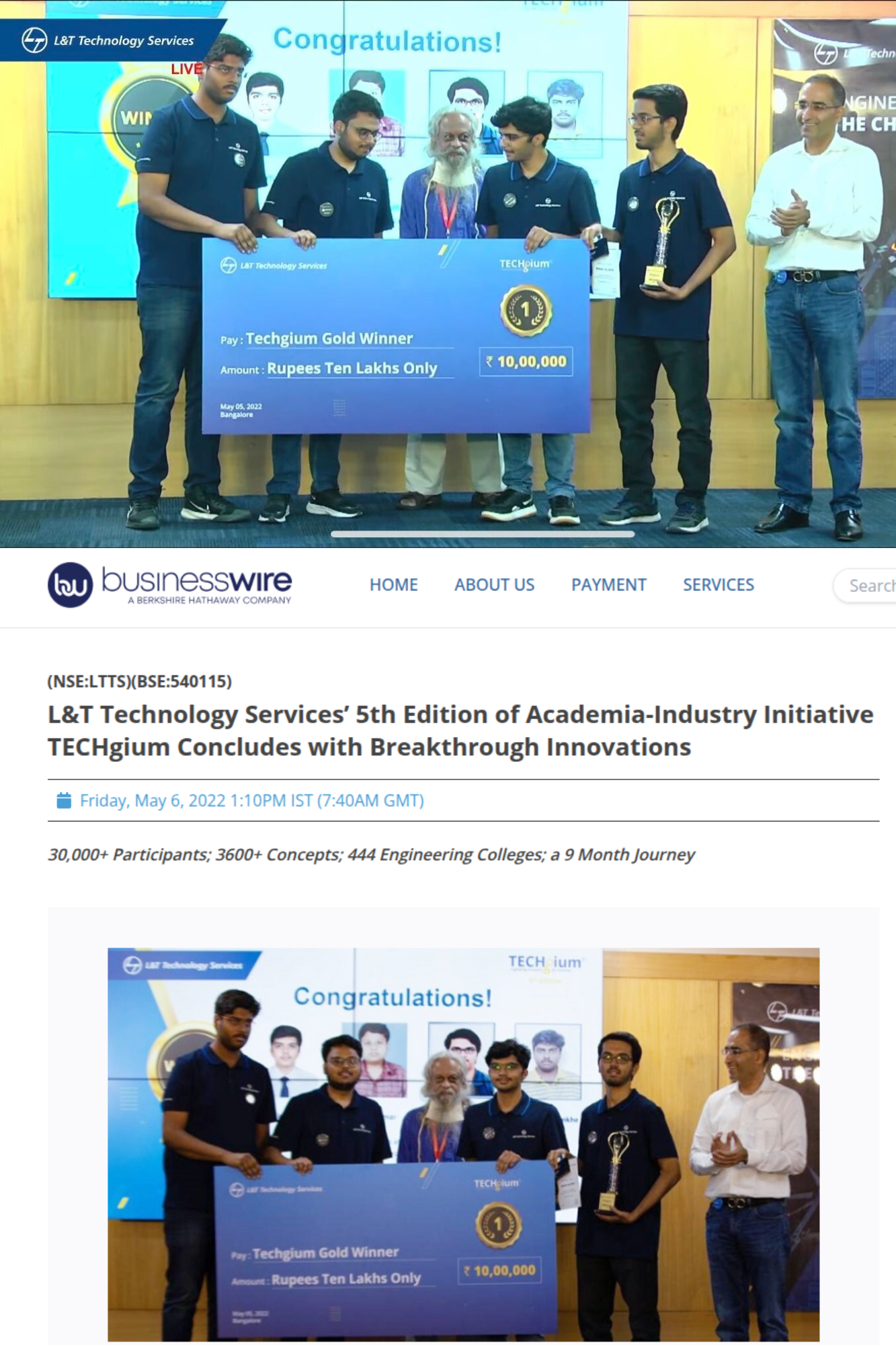
6-DoF Pose Tracker for Crane Hooks

Plug-and-play smart box for tracking crane hook position & orientation (hackathon project with L&T).

Unity C++
Sewer Monitoring Robot

Sewer Monitoring Robot

Underground pipeline mapping & structural analysis robot for efficient inspection and maintenance planning.

Unity C#
UV Disinfectant Robot

UV Disinfectant Robot

Autonomous UV-disinfection robot with optimized zap patterns to maximize area coverage while saving power.

C++ Haptic Rendering

Efficient RANSAC Ground Plane Segmentation

IMU-aided RANSAC algorithm that reduces computation and improves real-time performance for ground plane detection.

C++ OpenCV
Custom A* Path Planner

Custom Path Planning Algorithm

Lightweight ROS-independent A* planner with smoothing designed for resource-constrained boards.

C++ Path Smoothing

Achievements

Personal Blog

I write blogs to share lessons, mistakes, and breakthroughs. My goal is to make learning smoother for aspiring roboticists and inspire them to push through the same challenges I once faced.

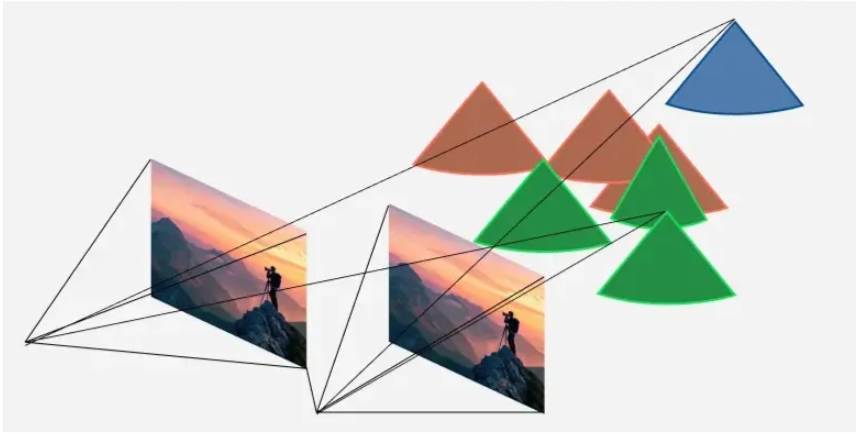
Hands on SLAM Frontend: Landmark Lifecycle

In Part 1, I walked through my early experiments with feature detection, matching, and triangulation. I asked a question: if triangulation works so well, why not just keep doing it forever between consecutive frames? ...

Read on Medium →
Article image 2

Hands-On SLAM: My Experience Building a Visual Frontend Pipeline

You’re staring at a research paper about SLAM, and there’s this intimidating diagram with boxes labelled “Bundle Adjustment,” “Loop Closure,” “Pose Graph Optimisation.” Your brain immediately goes into overwhelm mode. Where do you even start? ...

Read on Medium →

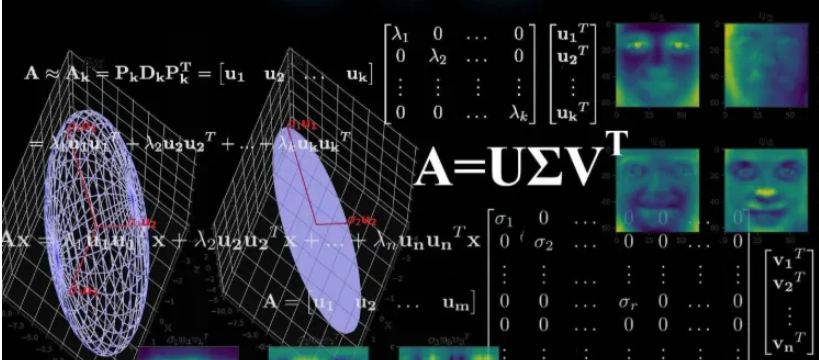
Demystifying SVD: The Math Powering Visual SLAM

Singular Value Decomposition sounds intimidating, but it’s actually one of the most powerful and practical tools that helps robots understand what they’re seeing. Think of it as a mathematical Swiss Army knife that solves many of the core problems in robot vision...

Read on Medium →

Epipolar Geometry in Practice: Build, Visualize, Understand

I built a tiny C++/OpenCV repo you can run locally to feel epipolar geometry instead of just reading about it...

Read on Medium →
Article image 5

Foundations of Robot Perception: A Beginner’s Guide to the Math

When you’re building a robot that needs to see the world, you’re basically asking it to solve puzzles like: “Where is that object in 3D space based on what I see in this 2D camera image?” ...“How did the robot move between these two camera shots?”

Read on Medium →

Building a Robust Plane Segmentation Pipeline for 3D Pose Estimation in Robotics

When working on industrial automation systems, flashy CV models and deep learning pipelines often get the spotlight. But sometimes, it’s the quieter, lower-level problems — like reliably extracting a plane from a noisy point cloud — that make or break a robotic system...

Read on Medium →

Get In Touch

Contact Information

Feel free to reach out if you have a question, or just want to connect.

sramasushil@ucsd.edu
+1 (858) 214-6356
San Diego, CA

Let's Connect

The best way to reach me is via email or LinkedIn — I typically respond within a day or two.